Updated August 2026.
Barbecue flavor is one of the most familiar seasoning directions in American foodservice, but its usefulness goes beyond traditional smoked meats.
A well-built barbecue spice blend can bring smoke, sweetness, heat, savory depth and color to a wide range of applications, including chili, roasted vegetables, plant-based proteins, sauces, rubs, snacks and prepared foods.
For foodservice and product development teams, the question is not only whether a blend tastes like barbecue. The more useful question is how that flavor performs in the finished application.
Why Barbecue Flavor Works Across Formats
Barbecue seasoning can support more than one product direction because it often combines several sensory cues in one blend.
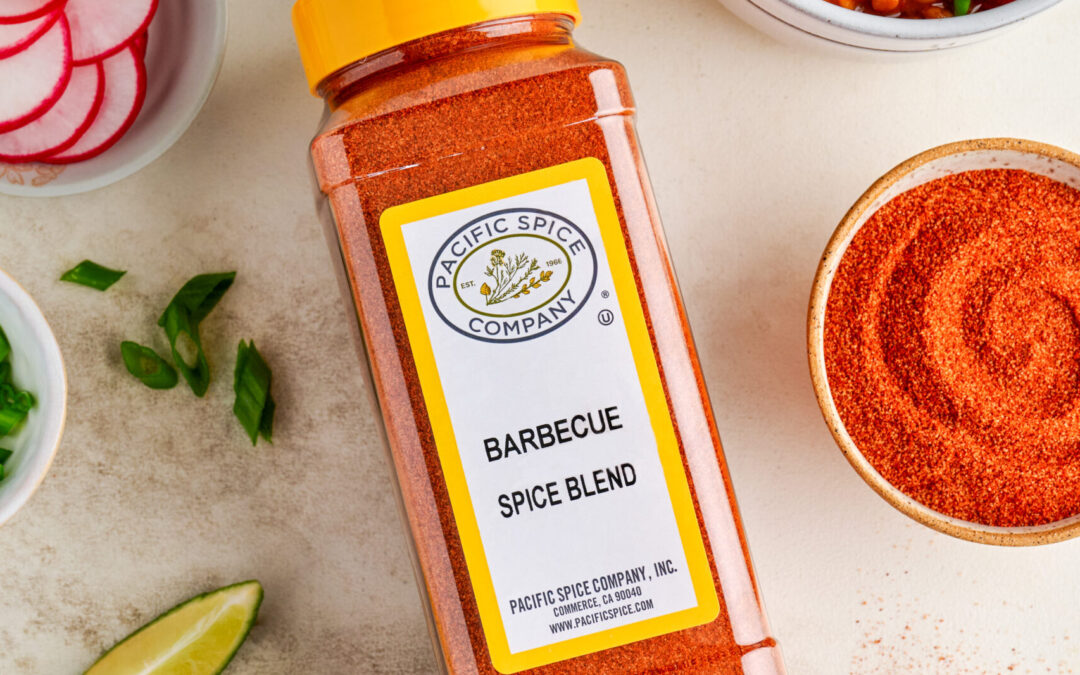
Pacific Spice Barbecue Spice Blend brings together savory garlic and onion, bold black pepper, warm cumin and a hint of cayenne pepper. Together, those ingredients help build the familiar barbecue profile customers recognize while leaving room for the blend to work across different formats.
That versatility makes barbecue seasoning useful in applications such as:
- Dry rubs for meats
- Plant-based proteins
- Vegetarian chili
- Snack seasonings
- Sauces and glazes
- Roasted vegetables
- Prepared meal components
- Foodservice limited-time offers
- Custom seasoning blends
The same flavor direction may be familiar, but each application asks the seasoning to do something different.
Application Matters
A barbecue blend for a dry rub does not need to perform the same way as a barbecue seasoning for chili, popcorn, a plant-based protein or a sauce.
In a dry rub, the blend may need to deliver surface flavor, color and aroma through cooking. In a chili, the seasoning has to build depth throughout the base. For a snack seasoning, particle size, flavor distribution and adhesion may matter more. In a sauce or glaze, the blend may need to support sweetness, smoke, heat and color without overpowering the finished product.
That is why application should guide the seasoning conversation.
Product teams may need to consider:
- Where the seasoning will be applied
- Whether the flavor needs to carry through cooking
- How much sweetness, smoke or heat should come through
- Whether the blend needs visual color impact
- Whether it will be used dry, wet, cooked, held, packaged or reheated
- What packaging format makes sense for the operation
- Whether the blend needs to support a foodservice, retail or manufacturing environment
A strong barbecue profile is not only about flavor. It is about how that flavor performs when the product is made, served and repeated.
From Application Insight to Test-Kitchen Prototype
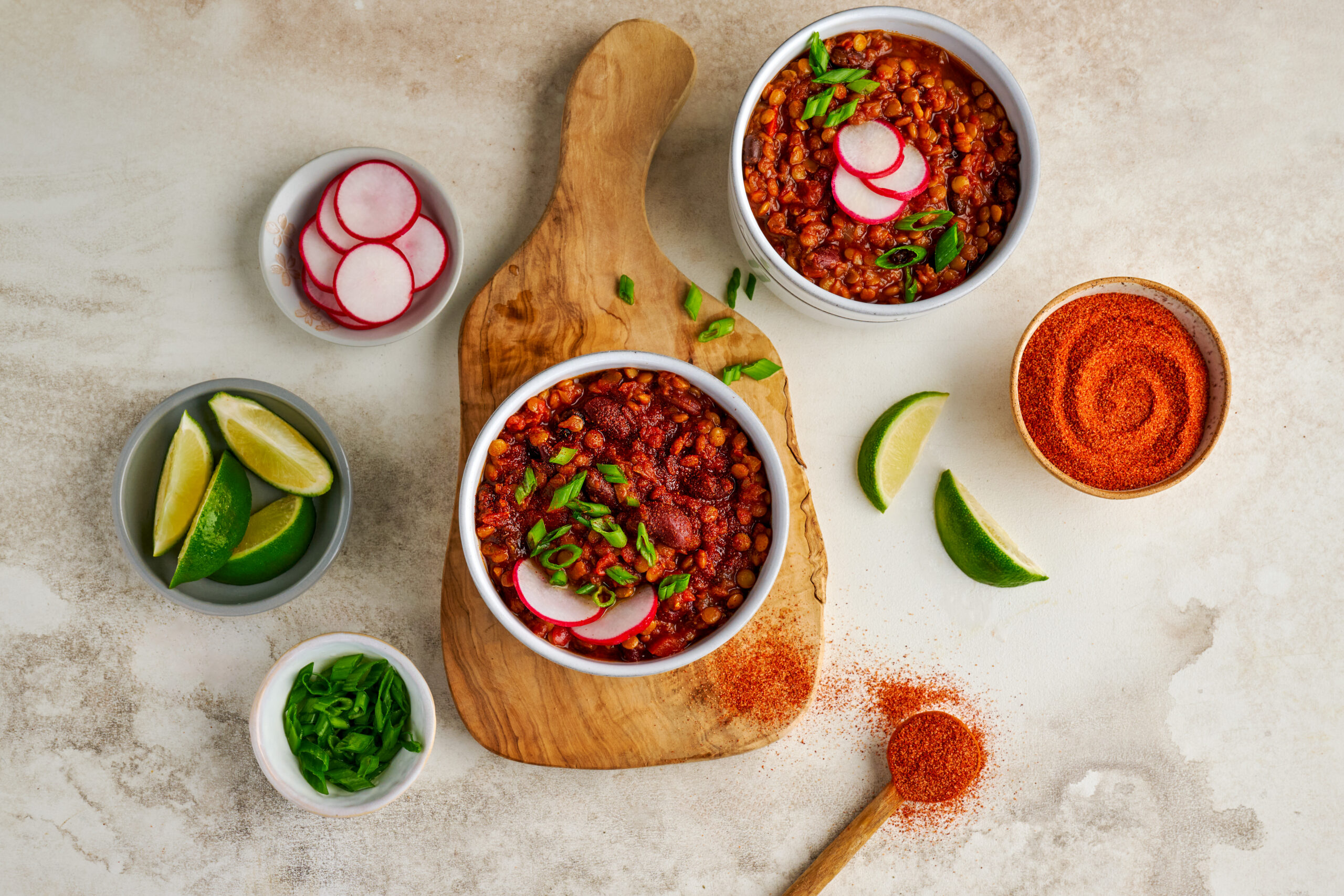
PSC’s Vegetarian Barbecue Chili remains useful as a kitchen-scale illustration of the flavor.
It shows how Pacific Spice Barbecue Spice Blend can bring smoky, savory depth to a plant-forward application without relying on traditional smoked meat as the flavor base.
As with any test-kitchen prototype, the recipe should be treated as a starting point. For commercial use, seasoning levels, ingredient ratios, packaging format and preparation method would need to be evaluated according to the finished product, process and operational requirements.
PSC Vegetarian Barbecue Chili
Commercial Application Notes
Barbecue seasoning can be especially useful in plant-forward applications because it brings familiar smoke, heat and savory depth to ingredients with a more neutral base.
In this chili, the blend helps build flavor across vegetables, lentils, beans and tomato. In other applications, the same barbecue direction may need to be adjusted based on the target product.
For foodservice and product development teams, important considerations may include:
- Usage rate
- Heat level
- Sweetness
- Smoke character
- Color impact
- Salt level
- Cooking or holding conditions
- Sauce, rub or dry seasoning format
- Packaging needs
- Expected volume
- Finished product goals
A barbecue seasoning for a chili may not be the same as a barbecue seasoning for a fried item, snack product, sauce, glaze or dry rub. The best version depends on the application.
From Barbecue Flavor to Custom Blend Development
Pacific Spice works with food manufacturers, foodservice teams, restaurant groups and private-label customers that need seasoning blends to perform in real applications.
Whether the project starts with a barbecue benchmark, an existing blend to replicate or reproduce, or a new flavor direction, PSC can support development from ideation to final product.
With R&D support, sourcing, milling, blending, custom formulation and packaging options, Pacific Spice can help adapt barbecue-style flavor for foodservice, manufacturing and private-label needs.
For more on how seasoning ideas move from kitchen concept to commercial use, read our guide to custom seasoning development.
Related Barbecue Applications
Barbecue flavor can be built in many directions depending on the product format and customer goal.
Explore Pacific Spice’s blog, “The Secret to Barbecue Rubs,” for more on how barbecue rubs can be used across cooking methods and applications.
Serving Suggestions
Serve this vegetarian barbecue chili with cornbread, rice, roasted vegetables, slaw or a cooling garnish to balance the smoky heat.
For commercial seasoning, foodservice or custom blend projects, contact Pacific Spice to discuss your application.