Updated August 2026.
A seasoning idea often starts in the kitchen.
It may begin as a restaurant recipe, an R&D bench sample, a customer benchmark, a dry rub, a snack seasoning concept or a flavor profile built for a limited-time menu item.
But a seasoning that tastes right in a small kitchen test is not automatically ready for production.
To work commercially, the blend has to perform in the finished application. It has to be consistent from batch to batch. It has to fit the customer’s process, packaging needs, quality requirements and operational realities.
That is where custom seasoning development becomes more than flavor creation. It becomes the bridge between a culinary idea and a production-ready product.
A Kitchen Recipe Is Only the Starting Point
A kitchen recipe is useful because it shows intent.
It tells the development team what the customer is trying to build: heat, brightness, savory depth, color, texture, aroma, visual identity or a signature flavor experience.
But kitchen formulas often need adjustment before they become commercial seasoning blends.
A recipe may use spoon measurements instead of percentages. It may rely on a specific cook’s judgment. It may work in one batch size but behave differently when scaled. It may taste right in a small sample but lose impact after cooking, holding, packaging, reheating or applying it to the finished product.
The goal is not always to copy the kitchen recipe exactly. The goal is to protect the intended eating experience while making the seasoning practical, repeatable and scalable.
Application Drives the Formula
A seasoning should be developed around how it will actually be used.
The same flavor direction may need to change depending on the application. A dry seasoning for fries does not perform the same way as a seasoning for noodles. A blend for fried chicken may need to carry through heat and fat. A snack seasoning may need the right particle size, adhesion and flavor distribution. A sauce or dressing may need a different balance of flavor release, color and solubility.
Application matters because the finished product determines what the seasoning needs to do.
A custom seasoning may be developed for:
- Fried protein coatings
- Snack seasonings
- Sauces or dressings
- Marinades
- Noodle or prepared meal applications
- Foodservice batch packs
- Retail or private-label products
- Limited-time menu items
- Multi-location restaurant operations
The flavor target is important. But the application tells the formula how that flavor needs to perform.
What Changes When a Blend Moves Toward Production
When a seasoning moves from a bench sample to production, several variables can affect the final result.
Important development considerations may include:
- Usage rate
- Salt level
- Heat level
- Particle size
- Ingredient form
- Color and visual appearance
- Flavor release
- Aroma impact
- Application method
- Batch size
- Cooking or processing conditions
- Storage and handling requirements
- Packaging format
- Expected volume
- Certification or label considerations
This is why a custom seasoning partner needs to understand more than the ingredient list.
They need to understand the finished product.
A blend can meet the flavor target in a sample and still need adjustment before it works in the final application. The seasoning has to hold up in the customer’s real process, whether that means a food manufacturing line, a foodservice kitchen, a prepared meal format or a multi-location restaurant system.
Matching, Adjusting or Building a Custom Blend
Food teams usually come to a seasoning partner in one of three ways.
They may have an existing blend they want to replicate or reproduce. This can be useful when a customer wants to centralize production, improve consistency, protect a recipe or reduce the burden of blending in-house.
They may have a benchmark product they want to match, improve or adapt. The goal may be to adjust flavor, simplify the ingredient system, support a new application, change the format or create a version that better fits production needs.
Or they may have a new flavor idea. The project may begin with a target profile, menu concept, product application, market opportunity or customer request.
Each starting point is different, but the development process should answer the same question:
What does the finished seasoning need to accomplish?
Consistency Is Part of the Product
For food manufacturers and foodservice teams, consistency is not a nice-to-have. It is part of the product experience.
If the seasoning changes from batch to batch, the finished product changes too. That can show up as flavor variation, color differences, uneven heat, inconsistent aroma or operational troubleshooting.
Consistency depends on more than the formula. It also depends on sourcing, processing, milling, blending, packaging, quality systems and documentation.
For restaurant groups, consistent seasoning across locations can help protect the customer experience. For food manufacturers, it can help support repeatable finished products. For private-label customers, it can help maintain the product profile customers expect.
A production-ready seasoning should be repeatable, not just flavorful.
Packaging Has to Fit the Operation
A custom seasoning also has to be packed in a way that supports how the customer uses it.
For one customer, that may mean bulk packaging for manufacturing. For another, it may mean foodservice jars. For a multi-location restaurant group, it may mean premeasured, ready-to-use batch sizes that reduce measuring steps and support consistency across locations.
Packaging can affect storage, handling, portion control, prep time, waste, training and kitchen workflow.
The right blend in the wrong package can still create operational friction.
That is why packaging should be part of the custom seasoning conversation early, not something that is only decided at the end. Learn more about bulk packaging, foodservice jars and premeasured batch sizes.
Documentation and Quality Support Matter Early
Custom seasoning development should also include early conversations about documentation, certifications and quality requirements.
Depending on the customer, application and sales channel, teams may need product specifications, Certificates of Analysis, kosher certification, organic certification, SQF documentation, ingredient information, lot traceability or other quality-related support.
These needs should not wait until the end of the project.
The earlier quality and documentation requirements are discussed, the easier it is to develop a blend that can move forward commercially.
What to Bring to a Custom Seasoning Conversation
Customers do not need to have every answer before starting a custom seasoning project. But the more context a supplier has, the more useful the development conversation becomes.
Helpful starting points include:
- The application
- The target flavor profile
- Any benchmark or current formula
- Desired heat, salt, sweetness, acidity or umami level
- Finished product format
- Usage rate, if known
- Packaging need
- Expected volume
- Production or kitchen process
- Certification, ingredient or label considerations
- Timeline and launch goals
A strong development conversation starts with understanding the product, not just the flavor.
How Pacific Spice Supports Custom Seasoning Development
Pacific Spice works with food manufacturers, foodservice teams, distributors, restaurant groups and private-label customers that need seasoning blends to perform in real applications.
Our R&D department supports customers with existing blends to replicate or reproduce, as well as teams developing new seasoning concepts from ideation to final product.
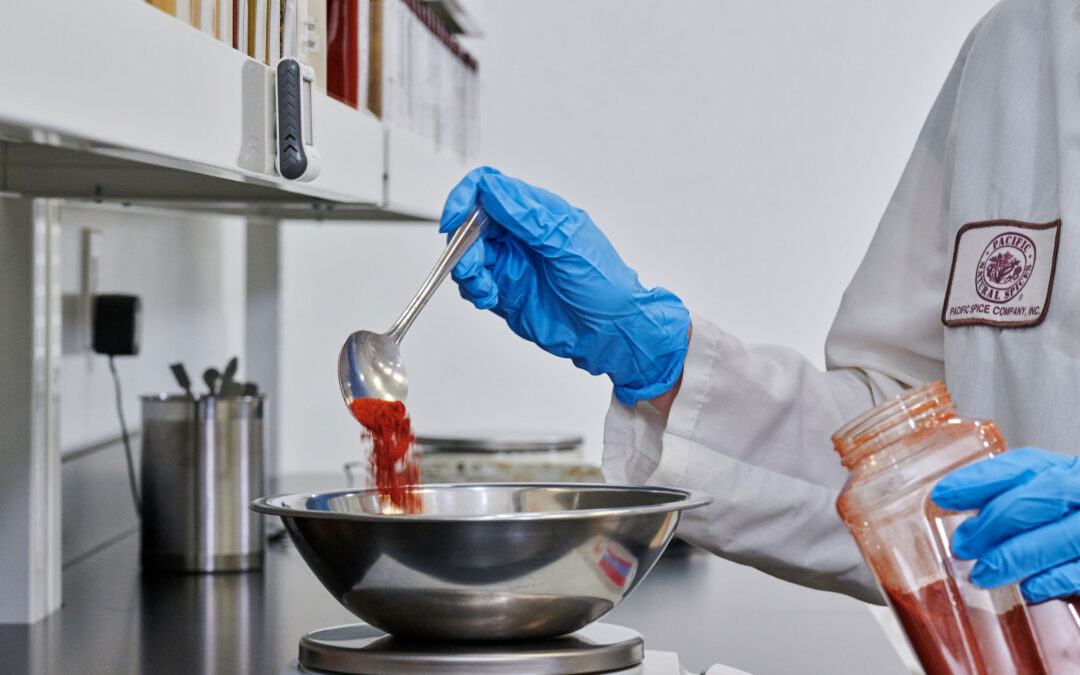
With global sourcing, domestic processing, in-house milling, blending, formulation support, an R&D laboratory and test kitchen, and packaging options that range from bulk to foodservice and retail formats, Pacific Spice can help move a seasoning idea from kitchen concept or benchmark to a more controlled, production-ready blend.
Whether the project starts with an existing recipe, a flavor to match or a new product idea, the next step is understanding how the seasoning needs to work in the finished application.
Have a kitchen recipe, benchmark or seasoning idea that needs to move toward production?
Contact Pacific Spice to discuss custom seasoning development, application needs and packaging options.