
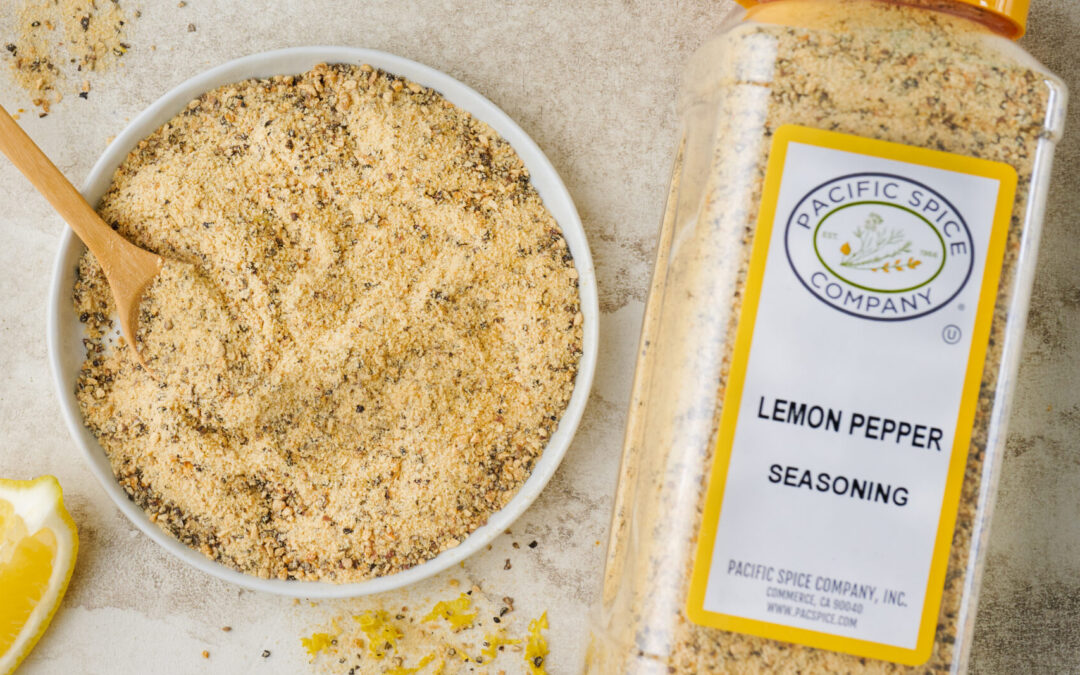
Lemon pepper has moved from a wing seasoning into a menu category. Datassential’s 2026 New Classics report finds 66 percent of consumers like or love the flavor profile, placing it in the band the company uses to classify a flavor as a new classic. Operators are responding across formats.
This is not a future trend. It is the current direction of foodservice menu development.
Popeyes added Honey Lemon Pepper Wings to its national wing lineup, expanding a permanent flavor roster that already spans heat, sweet, and savory profiles. Independents and regional chains are building lemon pepper into fries, popcorn shrimp, roasted vegetables, compound butters, and finishing seasonings on chicken thighs and Brussels sprouts. Distributor sales conversations are following the same pattern. Operators are asking for lemon pepper outside the wing application, and they are asking for more than one specification.
This blog explains what is driving the shift, where the category is expanding, and what separates a foodservice lemon pepper that earns a permanent menu slot from one that gets replaced.
Why Lemon Pepper Is Expanding in 2026
Two forces are running underneath the 66 percent affinity number.
Consumer demand for acid-and-heat pairings has matured. Menu trackers have documented the pattern across QSR, fast casual, and full service over the past several years. Operators have been layering acid into hot dishes, and consumers have been responding. Lemon pepper is the dry, line-ready version of that pairing. It delivers brightness without requiring a wet ingredient on the line.
Lemon pepper is operationally forgiving. Unlike fresh citrus, it does not oxidize, drift across a service, or require refrigeration. Unlike most acid-forward seasonings, it does not pull against the salt curve in the same way. It coats, it crusts, and it holds. These properties matter when a culinary team scales a flavor concept across multiple units.
The combined effect is compounding demand. Lemon pepper is moving from LTO rotation into permanent menu architecture.
Where Lemon Pepper Is Showing Up Beyond Wings
Across the foodservice market, operators are putting lemon pepper into formats that most category coverage still misses.
Hand-cut and frozen fries. A finishing dust applied immediately after the fryer. The salt and acid balance does most of the work. The pepper grind decides whether the application reads premium or generic.
Popcorn shrimp, calamari, and breaded proteins. Particularly in coastal and Southern chains. Lemon pepper here functions as a finishing seasoning that signals craft without changing the prep.
Roasted and charred vegetables. Brussels sprouts, broccolini, cauliflower steaks. The acid in the blend cuts the bitterness of the brassicas. The pepper grind gives the dish visible texture on the plate.
Compound butters and finishing fats. Operators are blending lemon pepper into softened butter or whipped feta and using it as a steak finisher, a corn topping, or a focaccia spread. Blend cost is low against the menu price.
Sauce bases. Honey lemon pepper as a glaze. Lemon pepper aioli as a dip. Lemon pepper ranch as a dressing. The blend specification determines how the finished sauce performs.
These applications are not speculative. They are appearing in menu development conversations and on competitor menus in the same quarter.
What Determines Lemon Pepper Quality in Foodservice
Lemon pepper looks like a simple blend. It is not. Small differences in citrus source, pepper variety, grind size, salt level, and the supporting aromatics each change how the finished blend performs on the application. A lemon pepper that works on a wing is not necessarily the same blend that works on a compound butter or a roasted vegetable.
That is the specification work behind a foodservice blend. It is the difference between a lemon pepper that earns a permanent slot on a menu and one that gets quietly replaced.
Pacific Spice Company has been doing this specification work for 60 years. The judgment about how to balance them for a given application is where blend craft shows up.
Pacific Spice Company’s Lemon Pepper Foodservice Blends
Pacific Spice Company carries two lemon pepper seasonings in the foodservice catalog. For operators whose application calls for a different specification, we can develop a custom blend to meet those requirements. Both standard blends are available in standard foodservice pack configurations through our distributor partners.
Talk to Our Team
Building a lemon pepper program for foodservice?
Talk through the catalog SKUs or scope a custom formulation for a specific application. Samples available through our distributor partners or directly through PSC.