Updated July 2026
Fried chicken can carry bold seasoning, but a strong mala application is not simply about adding more heat.
Mala is defined by the combination of chili-driven heat and the distinctive tingling sensation associated with Sichuan pepper. However, the two sensations do not have to appear at the same intensity.. For culinary and product-development teams, the opportunity is to decide how those sensations should work together and how the flavor should unfold across the bite.
That makes mala more than another hot seasoning. It gives teams several elements to shape: immediate aroma, savory depth, chili heat and a lingering tingle.
What Makes Mala Different?
The name mala brings together the ideas of “numbing” and “spicy.”
Chili peppers provide the familiar heat, while Sichuan pepper contributes the characteristic tingling or buzzing sensation. The two do not have to be equally intense.
For example, a mala profile can be approachable, with moderate heat and a subtle tingle. It can also be developed as a more adventurous flavor with a pronounced, lingering finish.
That flexibility gives foodservice and food-manufacturing teams an opportunity to create a spicy product that feels distinct—not simply hotter.
Why Fried Chicken Is a Strong Application
Fried chicken provides several qualities that work naturally with mala: a crisp coating, savory richness and enough surface flavor to support an assertive seasoning.
Because of that contrast, the flavor can develop across the bite. The first impression may be crunch and savory seasoning, followed by chili heat and then the tingling character of Sichuan pepper.
The goal is not necessarily to make every part of the experience equally strong. It is to determine what the finished product should emphasize.
Should the first impression be aromatic and savory, or should the chili heat arrive quickly? The tingle may remain subtle or build over several bites.
Those decisions define the application more clearly than simply asking for a “spicy” seasoning.
Building the Flavor Experience
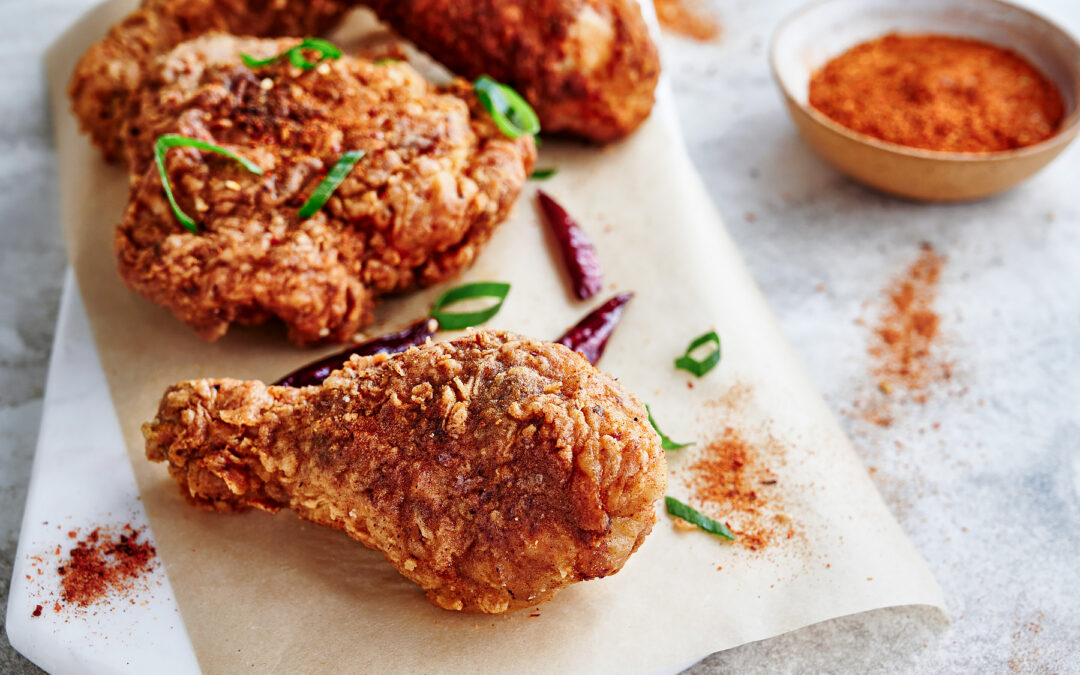
In PSC’s test-kitchen prototype, Mala seasoning is introduced in more than one part of the recipe. The chicken is seasoned before breading, and an additional portion of the blend is incorporated into the wet mixture.
Garlic, ginger, black pepper and mustard support the seasoned coating.
The prototype is not intended to prescribe one correct way to develop mala fried chicken. It demonstrates how the flavor can be considered as part of the complete dish rather than added as an afterthought.
For a customer project, the right seasoning profile would depend on the finished product, desired intensity, audience and existing process. PSC’s role is to develop or adapt the seasoning around those requirements.
Start With a Clear Flavor Target
Before adjusting a formula, it helps to define the intended eating experience.
A culinary or product-development team may want to consider:
- How pronounced should the chili heat be?
- How noticeable should the Sichuan pepper tingle be?
- Should the effect appear immediately or build over several bites?
- Does the flavor need broad appeal or a more adventurous profile?
- Is the concept intended for a core product or a limited-time offer?
- What product format will carry the seasoning?
These questions create a more useful development target.
A mala seasoning for a chicken sandwich may need a different sensory balance than one developed for wings, popcorn chicken or a snack application. The defining heat-and-tingle combination can remain recognizable while the overall profile is adjusted around the finished product.
From Recipe to Test-Kitchen Prototype
PSC’s original Mala Fried Chicken recipe remains useful as a kitchen-scale illustration of the flavor.
It gives culinary teams an opportunity to experience the seasoning in a complete application and begin identifying the direction they may want to explore further.
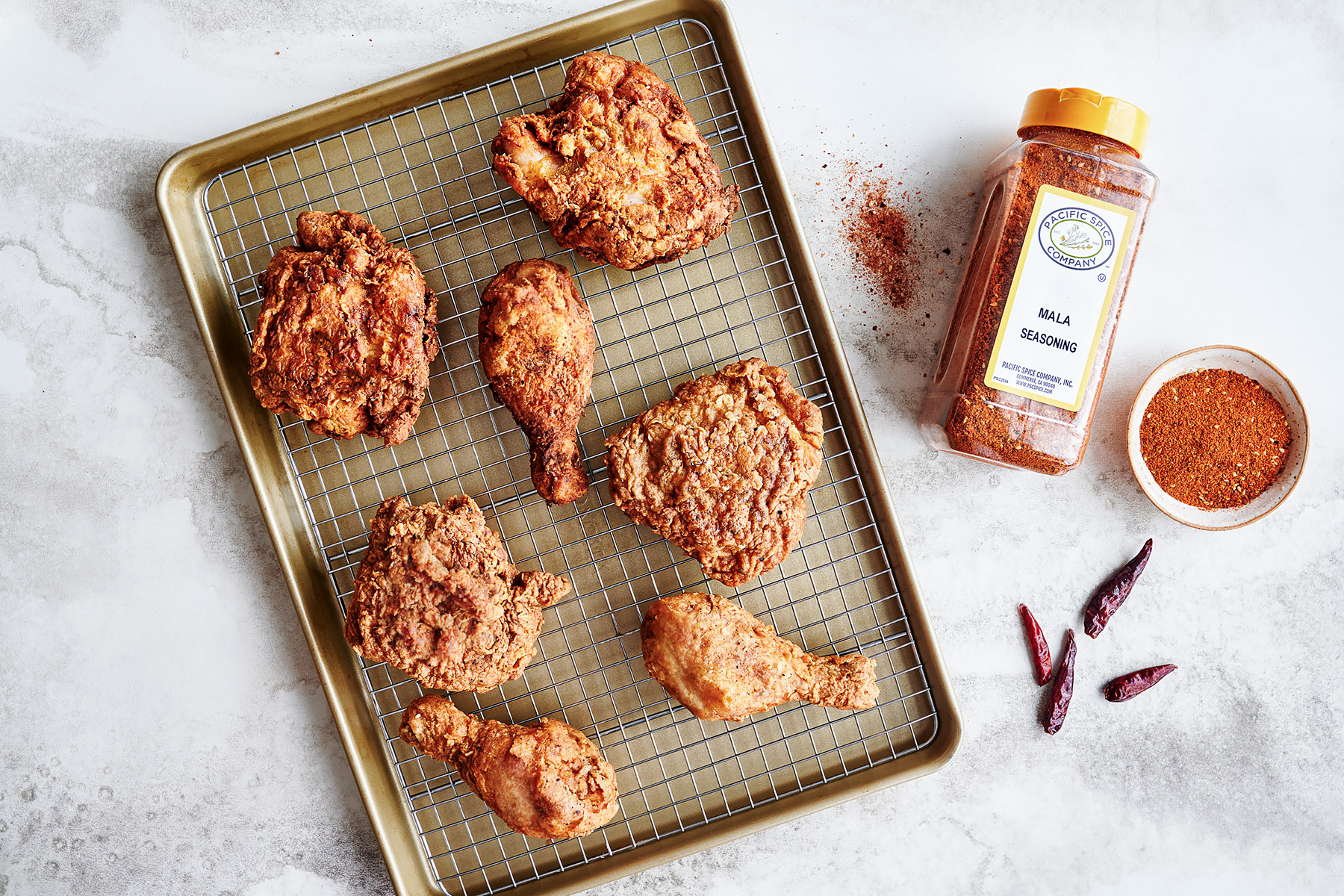
PSC’s kitchen-scale prototype explores Mala seasoning in a complete fried chicken application.
As a result, It should be treated as a test-kitchen starting point, not as a commercial formula or a direct scale-up recommendation.
Mala Beyond Bone-In Fried Chicken
Fried chicken is one expression of the profile, but the same flavor direction can inspire a broader range of products and menu concepts:
- Wings and tenders
- Popcorn chicken
- Chicken sandwiches
- Seasoned fries and potato products
- Breaded seafood
- Frozen appetizers
- Snack seasonings
- Dipping and finishing sauces
- Plant-based breaded products
Each format creates a different flavor experience.
A chicken sandwich may benefit from a profile that remains noticeable alongside bread, sauce and toppings. A snack seasoning may need to communicate the mala character in a smaller bite. A dipping sauce may create a different balance between the heat, tingle and supporting flavors.
The objective is not to use one blend identically across every format. It is to retain the recognizable mala character while shaping the seasoning around the finished application.
Developing a Mala-Inspired Concept?
Pacific Spice Company works with foodservice and food-manufacturing teams to develop custom seasoning blends and adapt existing profiles for specific products and menu applications.
Customers can begin with an existing PSC blend for inspiration or work with our team to create a flavor profile around their product, audience and requirements.
Interested in exploring a mala-inspired application? Contact our team to discuss your concept or request a sample.